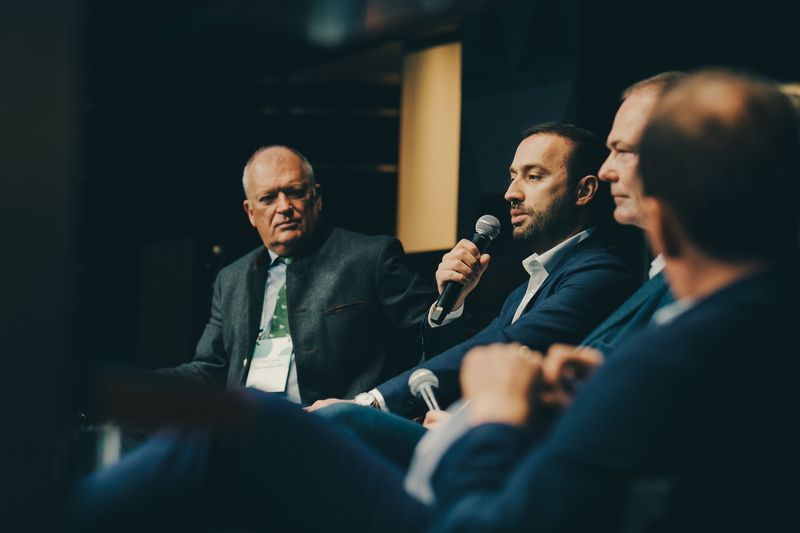
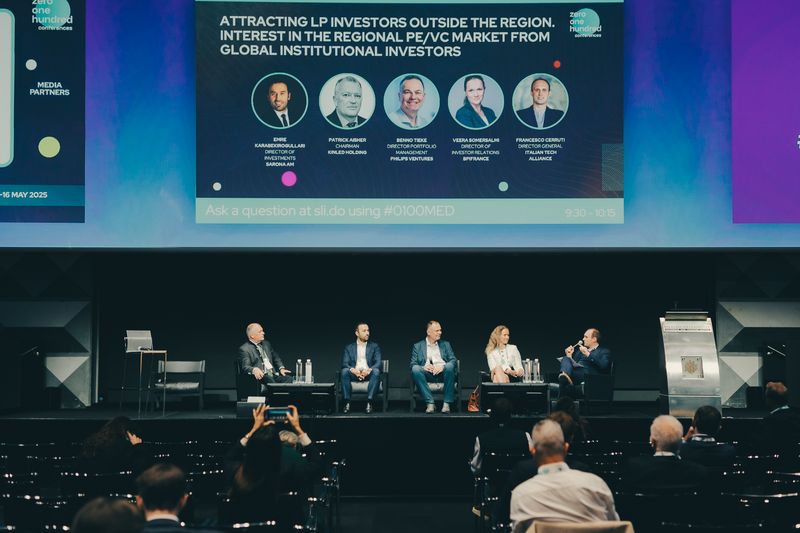
LP panels are essential at every conference, especially as fundraising becomes increasingly competitive and challenging. One of the highlights at the 0100 Conference Mediterranean was the panel titled “Attracting LP Investors Outside the Region: Interest in the Regional PE/VC Market from Global Institutional Investors.” In this session, key investors shared insights into the growing global interest in private equity and venture capital markets within the Mediterranean and Southern Europe. Moderated by Francesco Cerruti, Director General of the Italian Tech Alliance, the panel brought together leading figures in the industry, including Emre Karabekirogullari, Director of Investments at Sarona AM; Patrick Aisher, Chairman of Kinled Holding; Benno Tieke, Director of Portfolio Management at Philips Ventures; and Veera Somersalmi, Director of Investor Relations at Bpifrance.

The discussion focused on the opportunities and challenges Mediterranean markets present for attracting global institutional LPs, exploring the region’s growth potential in tech and innovation, and the need for specialized investment strategies. Here are the session’s key insights:
Italy’s Potential and Room for Growth
Francesco Cerruti began by noting that Italy, despite being one of Europe’s largest economies, still ranks low in investments directed toward innovation and startups. This gap, he argued, presents an enormous growth opportunity as Italy seeks to establish itself as a significant tech hub in Europe. Cerruti highlighted the panel’s goal: to discuss strategies to attract more international investors and to examine how local markets can leverage outside perspectives and capital for further growth.
Building Trust Through Thematic Investment Strategies
Emre Karabekirogullari of Sarona AM emphasized the importance of establishing thematic edges for investment, especially when dealing with government-affiliated LPs. Sarona’s experience managing funds on behalf of institutions like the U.S. Development Finance Corporation and the Australian Department of Foreign Affairs highlights a trend in which these entities are less focused on financial returns and more on building strategic alliances. This approach fosters regional economic development by targeting specific themes such as climate and gender, enhancing trade relations.
The Importance of Vertical Focus for Corporate Ventures
Benno Tieke of Philips Ventures discussed the benefits of vertical specialization, particularly for corporate investors. Philips Ventures, which primarily invests in health tech, seeks GPs with deep industry expertise in healthcare and medtech to ensure alignment with Philips’ strategic goals. For Philips Ventures, a well-defined vertical focus bolsters industry-specific knowledge and maximizes the added value of investment partnerships. Tieke emphasized that “funds with sector expertise are crucial in areas like healthcare and deep tech, where deep, specialized knowledge is a key differentiator for value creation.”
Government-backed Funding: Pros, Cons, and the Mediterranean Landscape
Patrick Aisher from Kinled Holding elaborated on the pros and cons of government-backed investments. He explained that while these funds provide substantial capital, their decision-making processes can sometimes be sluggish. Aisher noted the Mediterranean region’s bureaucratic tendencies, which can sometimes delay funding approvals to the detriment of rapid-growing ventures. Yet, he acknowledged improvements and increasing efficiency among government-backed agencies, both in the Mediterranean and Eastern Europe, as these institutions recognize the need to compete with private and family office-backed capital. "Civil servants tend to delay decisions, which is tough for fast-growing companies that need capital immediately," Aisher observed, while pointing out that more agile approaches are emerging across the region.
France as a Model: Insights from Bpifrance’s Strategy
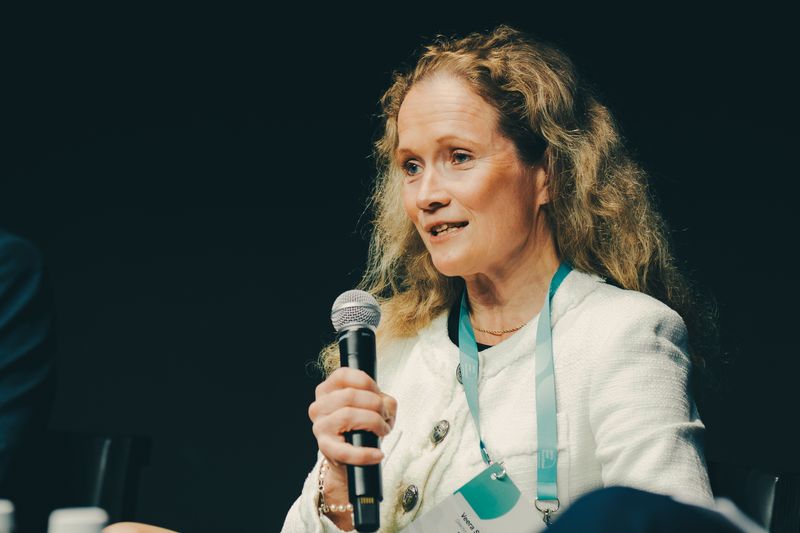
Veera Somersalmi of Bpifrance provided a unique perspective from one of Europe’s leading public investment banks. She shared insights into how Bpifrance has cultivated a thriving ecosystem by positioning itself as a collaborative partner for institutional investors, family offices, and sovereign wealth funds. Bpifrance’s approach focuses on open innovation and working closely with other countries to build robust networks and partnerships. She noted, “Our goal is to bring family offices and institutional investors directly to French companies, guiding them to opportunities that align with their interests, whether in maritime sustainability or health tech.” This focus on ecosystem building and sector expertise, she argued, has been central to making France a stronghold for innovation-driven investments.
Key Challenges and Opportunities in Deep Tech and Tech Transfer
The discussion turned to deep tech and tech transfer, areas that require adept handling of relationships among researchers, entrepreneurs, and investors. Panelists discussed the high capital demands and risks involved in funding deep-tech projects, particularly those emerging from academic institutions. Aisher shared that while investors from regions like Silicon Valley embrace such risks, European institutions are often more conservative. “Many European institutions still prefer safer investments,” Aisher noted. “We need to cultivate a venture-friendly environment where capital supports early-stage innovation.” The panel highlighted the importance of tech transfer mechanisms that ease the transition of academic research into viable commercial ventures, especially within high-potential sectors like AI and biomedical research.
Attracting Global LPs: Key Strategies and Trends
Benno Tieke emphasized that cultivating trust and showcasing local expertise are essential when attracting international LPs. Regions like Eindhoven in the Netherlands demonstrate this model well, having combined public-private partnerships with a strong regional identity, as seen in the Brainport initiative. Tieke encouraged Mediterranean regions to adopt similar models, suggesting that international LPs are more likely to invest when they see cohesive ecosystems and strong partnerships between government, private sector, and academic institutions. “Building a collaborative identity, as we’ve done in Eindhoven, shows LPs the long-term commitment and collective strength of a region,” Tieke remarked.
The Mediterranean Region: An Emerging Market
Patrick Aisher rounded out the panel by addressing misconceptions about the Mediterranean market, particularly regarding North Africa. He argued that the region’s proximity and cultural ties to Europe make it a highly attractive yet overlooked market, especially as North African economies grow. "The Mediterranean is more than just Southern Europe," he pointed out. "We have 300 million people on the southern shore of the Mediterranean, many in emerging markets like Morocco and Tunisia, which offer untapped opportunities for European investors."
The panel concluded with reflections on the Mediterranean’s potential and how a combined effort by LPs, GPs, and government agencies could help unlock it. As Europe’s venture ecosystem continues to mature, Mediterranean markets stand out as both underfunded and high-potential, especially in sectors such as deep tech, climate tech, and healthcare innovation.

In his closing remarks, Cerruti highlighted the session’s takeaways: the importance of thematic investment strategies, the critical role of sector expertise, and the growing attractiveness of the Mediterranean as a vibrant, emerging investment region. For Mediterranean economies to reach their full potential, regional stakeholders will need to adopt collaborative models and specialized strategies, aligning with global trends while addressing local market needs.